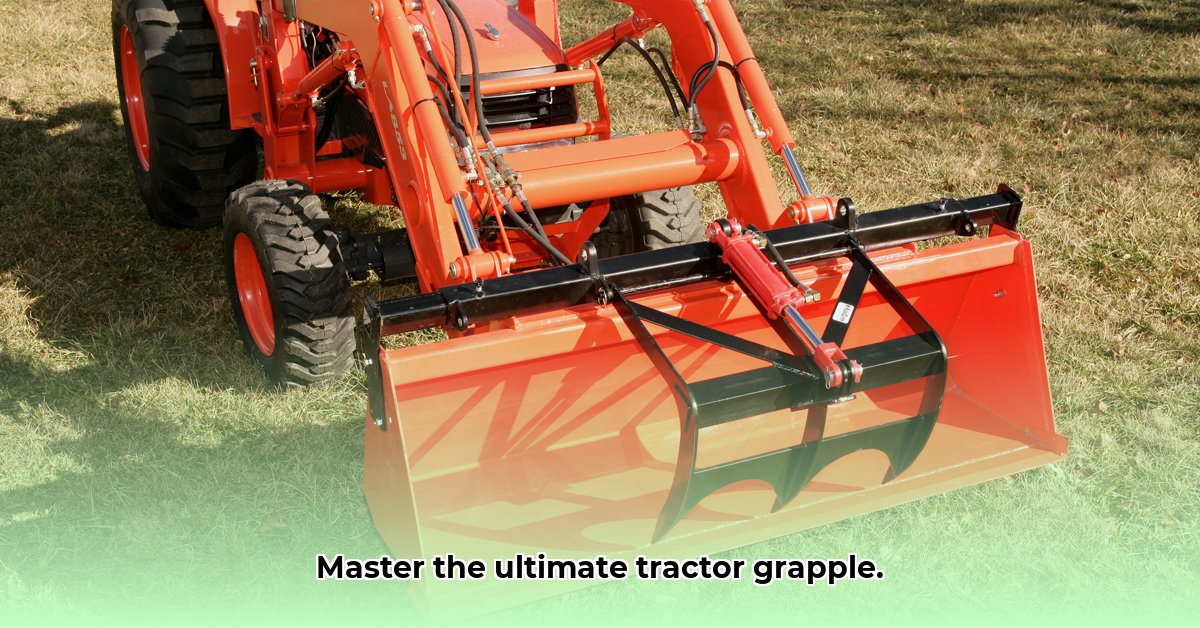
Choosing the right tractor grapple significantly impacts efficiency and safety. This guide provides a comprehensive walkthrough, helping you select the perfect grapple for your specific needs and budget. The best grapple depends entirely on its intended application. For more detailed information, check out this helpful resource.
Types of Tractor Grapples: A Comparative Analysis
Several grapple types cater to diverse applications. Understanding their strengths and weaknesses is crucial for informed decision-making.
Root Rakes
- Strengths: Versatile, ideal for clearing light brush, pulling up roots, and handling smaller debris. Effective on uneven ground. Relatively affordable.
- Weaknesses: Limited lifting capacity for heavy materials. Not suitable for large rocks or dense objects.
- Ideal Applications: Landscaping, light cleanup, removing small roots and debris.
Rock Buckets
- Strengths: High lifting capacity, specialized for handling heavy rocks and dense materials. Often feature reinforced construction and sometimes a crushing mechanism.
- Weaknesses: Less versatile than root rakes. Higher initial cost. Not suitable for light materials.
- Ideal Applications: Moving large rocks, demolition work, clearing heavy debris.
Debris Grapples
- Strengths: High volume capacity. Ideal for clearing large quantities of light, bulky materials (e.g., brush, storm debris). Efficient for cleanup operations.
- Weaknesses: Limited strength for heavy materials. Not suitable for dense objects or heavy loads.
- Ideal Applications: Post-storm cleanup, clearing fields of debris, construction site cleanup.
Log Grapples
- Strengths: High clamping force. Specialized for handling logs and timber. Efficient and safe for logging operations.
- Weaknesses: Limited versatility. Specialized purpose. High cost.
- Ideal Applications: Logging, moving heavy timber, and forestry work.
Factors to Consider When Choosing a Grapple
Several key factors influence grapple selection beyond the type itself. Careful consideration of these aspects ensures compatibility, efficiency, and safety.
Tractor Compatibility
- Hydraulic Capacity: The grapple's hydraulic demands must not exceed your tractor's capabilities. Insufficient hydraulic flow leads to slow operation and potential damage.
- Lift Capacity: The grapple's weight and maximum load must be well within your tractor's lifting capacity. Overloading can cause serious damage to your tractor or lead to accidents.
- Quick-Attach Systems: Ensure your chosen grapple is compatible with your tractor's quick-attach system for easy and safe mounting and dismounting.
Material Handling
- Type: The grapple's design must suit the materials you'll handle (logs, brush, rocks, etc.). A root rake isn't suitable for heavy rocks, and vice versa.
- Weight: Consider both the weight of individual items and the overall weight you'll be lifting. Accurate weight assessment is critical to avoid overloading.
- Size: The grapple's jaw size must accommodate the size and shape of the materials you'll handle. Too small a jaw makes grabbing materials inefficient; too large a jaw reduces precision.
Budget
Grapples range widely in price. Consider not only the initial purchase price but also long-term costs, including maintenance, repairs, and potential replacements. A higher upfront investment in a durable grapple can often prove more cost-effective in the long run.
Maintenance
Regular maintenance extends grapple lifespan and minimizes repair costs. This includes routine lubrication, inspections for wear and tear, and prompt attention to any damage. Refer to your grapple's manual for a detailed maintenance schedule. Ignoring maintenance can lead to unexpected failures and costly repairs.
Step-by-Step Guide to Selecting a Grapple
This structured approach helps you make an informed decision.
- Assess Your Needs: Clearly define the applications and the type and volume of materials you'll handle—logs, rocks, brush, etc.
- Check Tractor Specifications: Consult your tractor's manual for crucial details on hydraulic capacity, lift capacity, and quick-attach system.
- Research Grapple Types: Review the suitability of each type (root rake, rock bucket, debris grapple, log grapple) based on your specific needs and materials.
- Gather Price Quotes: Obtain quotes from multiple suppliers for comparable models, comparing prices and features.
- Verify Compatibility: Double-check compatibility between the chosen grapple and your tractor to avoid potentially costly damage.
- Make Your Decision: Select the grapple that optimally balances your needs, budget, and tractor capabilities.
Safety Considerations
Prioritize safety in all grapple operations.
- Pre-Operation Inspection: Always inspect your grapple before each use, checking for any damage, loose parts, or hydraulic leaks.
- Quick-Release Valves: Understand and utilize your grapple's quick-release valves to quickly drop a load in case of emergencies.
- Operator Training: Ensure proper operator training before using any tractor grapple.
- Safe Operating Procedures: Always adhere to the manufacturer's safety instructions and guidelines.
Conclusion
Selecting the right tractor grapple is a crucial decision. This guide provides a framework for making an informed, budget-conscious, and safety-centric choice. Remember that the most effective grapple is the one best suited to your specific needs and working conditions.
Resources
- Manufacturer Websites: Consult websites of leading agricultural equipment manufacturers for specifications and details on their grapple offerings.
- Dealer Networks: Work with local dealers for personalized advice, sales, and service.
- Safety Regulations: Refer to relevant safety regulations and guidelines for your region concerning the operation of agricultural equipment.